Well Water Testing & Treatment in Asheville, NC
Test for bacteria, iron, manganese, low pH and more, then treat what your well actually has.
Water Testing for Asheville Homes
Nobody tests a private well unless the owner does it, and most wells in the mountains have never been tested or were last tested when the house was built. If you have orange or black staining, blue-green marks under a dripping tap, a rotten-egg smell, or you just moved here and do not know what you are drinking, a test tells you exactly what is in the water. We sample for total coliform and E. coli bacteria, pH, iron, manganese, hardness, nitrates and, where it makes sense, radon and other naturally occurring minerals from the rock. Then we recommend treatment sized to the results: acid neutralizers for the low-pH water that is so common here, iron and manganese filters for staining, UV for bacteria, and softeners only where hardness is actually the problem.
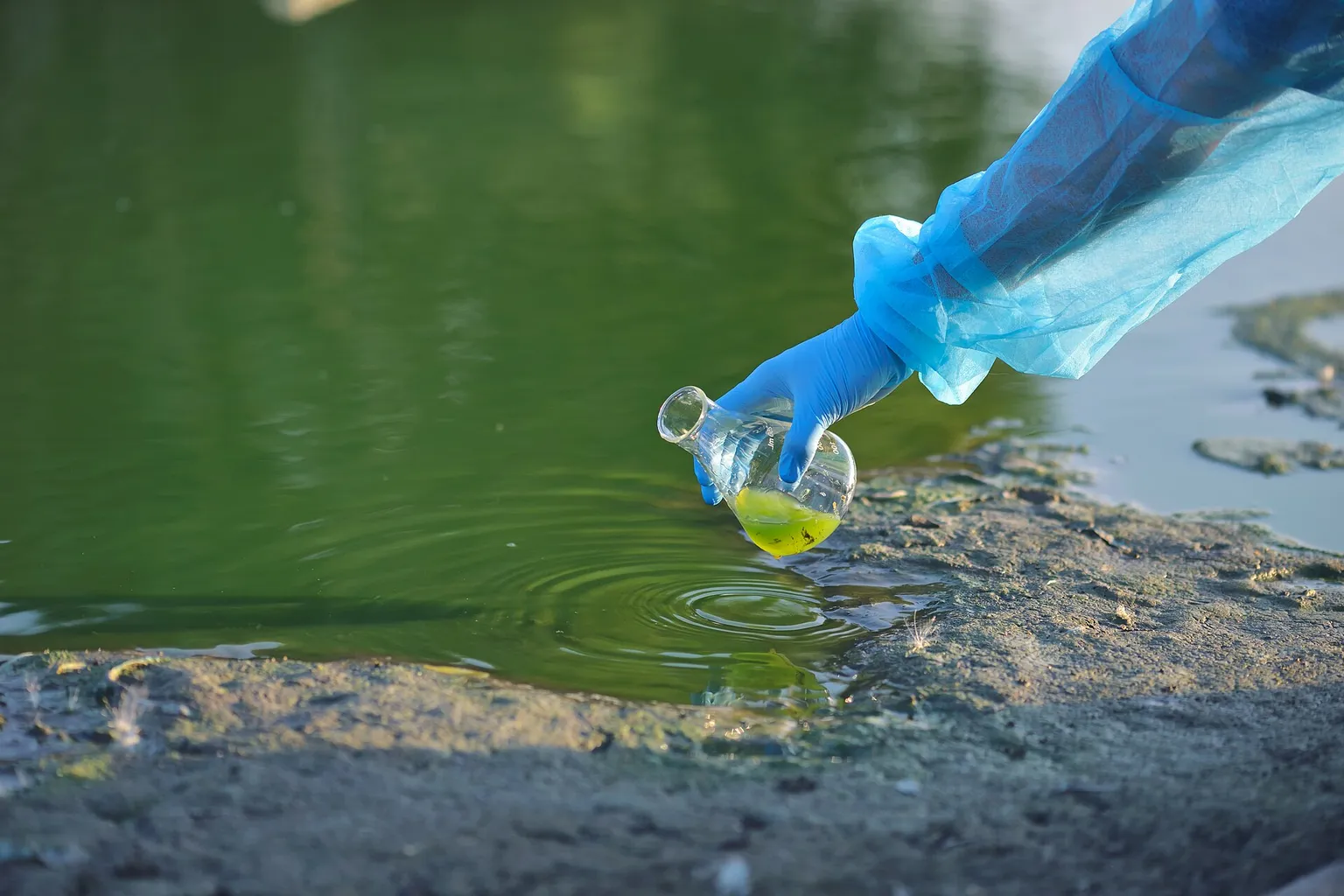
Local well service in Asheville
Most of Asheville proper drinks city water, so if you are downtown, in West Asheville or Montford, you probably do not need us. But the city sprawls up into the ridges, and the edges of Asheville are full of wells: the upper end of Haw Creek, Town Mountain, Riceville, the headwaters of Beaverdam, Bent Creek, and the stretches out Leicester Highway and toward Enka where the water lines stop. These are some of the steepest and deepest wells we work on, drilled 500 feet or more to find a few gallons a minute, with long runs of drop pipe and pumps that take real work to pull. Asheville also has more turnover than anywhere else in the mountains: second homes, short-term rentals, and buyers from out of state who have never owned a well and need an inspection and a flow test before they close. The water chemistry is the same as the rest of the region, acidic enough to pit copper, with iron and manganese in the lower hollows. We service the pump, the tank, the switch and the treatment, and we tell you plainly when a problem is the well itself rather than the equipment.
- Bacteria (total coliform and E. coli) and nitrate sampling
- pH, iron, manganese and hardness analysis
- Radon and mineral testing where the rock calls for it
- Acid neutralizers, iron and manganese filters, UV and softeners sized to results
- Shock chlorination of a well that tests positive
- Post-install retest to confirm the fix
Need water testing elsewhere? See all of our Asheville well services or water testing across Western North Carolina.
Water Testing in Asheville
Tell us what’s happening and we’ll call you back. Local Asheville service.
Neighborhoods We Cover in Asheville
From lots on the edge of town water to ridge-top wells: if it’s in or around Asheville, we service it.
- Haw Creek
- Town Mountain
- Riceville
- Beaverdam
- Bent Creek
- Leicester Highway
Common Well Problems in Asheville
The issues we see most on local wells, and how we fix them.
Very deep wells on Town Mountain and Beaverdam ridge lots
Homes up the ridge roads often sit on wells several hundred feet deep with low yield. Pulling and resetting a pump at that depth, and sizing it so it does not pump the well dry, is specialist work, and we do it every week.
Rental and second-home turnover
A house that sits empty for weeks, then fills with guests, is hard on a well system: stale water, a waterlogged tank nobody noticed, a pump that short-cycles under a full house. We set these systems up to take the swings.
Buying on a well for the first time
Out-of-state buyers in the Asheville market often have no idea what a well costs to own. A flow test and equipment inspection inside your due-diligence period puts a number on it.
Water Testing in Asheville: FAQs
I am inside Asheville city limits. Could I still be on a well?
Do you cover Arden, Avery’s Creek and Bent Creek?
Can you do a well inspection before our closing?
How often should I test my well water?
My water leaves orange or black stains. Is that dangerous?
Why are my copper pipes getting pinhole leaks?
My well flooded. Is the water safe?
Also Serving Near Asheville
Need Water Testing in Asheville?
Call now for a straight answer and an up-front price. No-water calls get priority.